
It is highly unlikely that anyone will begin their Gurgaon property hunt searching for a “property type”. The search begins with budget, a few sectors and certain things you are not willing to compromise on.
As a result, the same budget may get you an entire floor with a private entrance, an apartment in a tower with a clubhouse or, if you stretch, even a villa. The comparison between a builder floor and an apartment in Gurgaon basically hinges on three things: how much privacy you need, which facilities you will actually use and how much maintenance you are willing to handle yourself.
Builder Floor vs Apartment in Gurgaon: What Should Buyers Compare?
Start with what the words mean. A builder floor is usually one home per level in a low-rise building on a single plot, often sold along with a share of the land. An apartment is a home inside a larger development with shared infrastructure. What you actually own, and who pays for what, depends on the sale deed, the project papers and the approvals behind them. So read those first, before you trust any generalisation, including the ones in this article.
Privacy. On paper, the builder floor wins. Three or four households share the building, there’s often a private entrance, and you rarely stand in a lift lobby with half the block. A tower puts you closer to many more families. A well-planned one can still feel calm and screened, so visit at 8 am and again at 7 pm before you decide.
Amenities. This is where apartments pull ahead. Gated societies commonly come with a clubhouse, pool, gym, play areas and guarded gates. A standalone builder floor usually has none of that, unless it sits inside a larger gated colony. Ask what is built and running today, not what the brochure promises.
Maintenance. In a society, a management team or association collects recurring charges and runs the services. In a builder floor, the staircase, water arrangements, any lift and the roof are shared among a handful of owners, often on an informal understanding. Bills can be lower and rules fewer. Decisions can also be slower, and the effort lands on you. Get whatever you agree in writing.
Parking and access. Many builder floors have stilt parking for the building. Apartments usually come with allotted covered or basement spaces. Find out how many spaces belong to your unit, and where your guests park.
Paperwork. Here the two formats differ most. A project that must be registered under RERA carries a registration number you can look up on the HRERA portal. Smaller projects can fall below the registration threshold, so a builder floor may have no HRERA record at all. That’s not automatically a problem. It does mean more of the checking falls to you and your advocate.
Villa vs Apartment in Gurgaon: Space Against Convenience
Choosing between a villa and an apartment in Gurgaon is essentially a choice between space and control on one side and convenience on the other. In terms of living area, garden or terrace space, and the ability to customise within approval limits, villas win hands down. They also require you to maintain more.
The structure, the garden and any private amenities are all yours, as is your security. How secure that feels depends largely on the neighbourhood around the property.
Apartments trade this extra space for amenities, central security and building maintenance, along with periodic costs and decisions taken by a larger body, the association. Outside space? You get a balcony in place of a lawn.
It helps to know that “villas” in Gurgaon can mean a variety of housing options, from stand-alone houses to row houses in walled communities or even villa floors. Ask for the plot area, built-up area and land share before comparing prices and costs. Community charges and the conditions of land ownership also differ from one project to another.
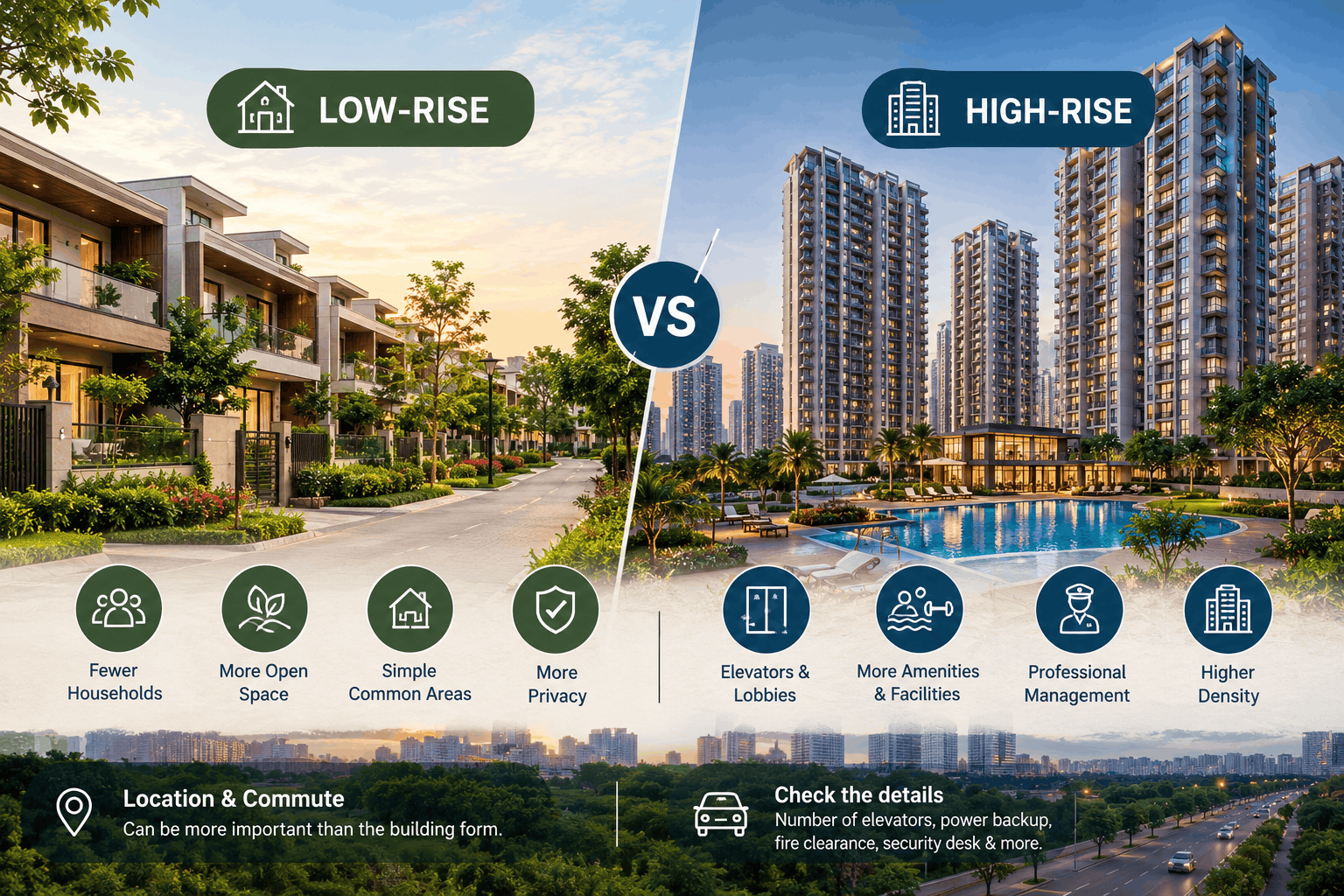
Low-Rise vs High-Rise in Gurgaon: How Building Height Changes Daily Life
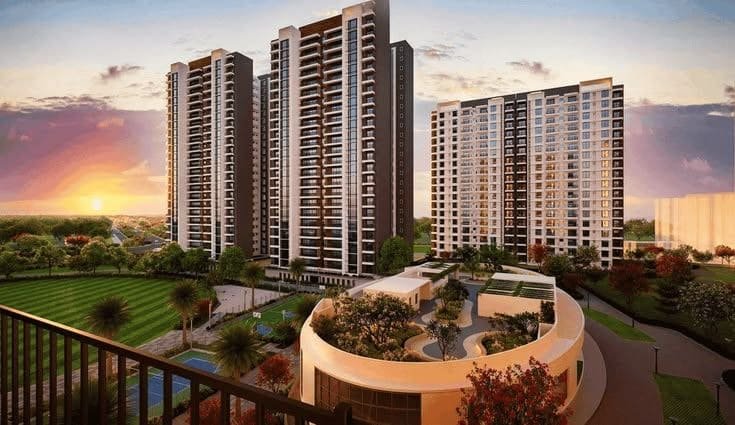
Low-rise vs high-rise in Gurgaon is a question of density as well as height. A low-rise building has relatively fewer households and simpler common areas, while a high-rise has many times more households in one structure, along with lifts, lobbies, facilities and, usually, professional property management.
Height alone does not tell you much. Many low-rise projects are gated communities with beautiful landscaping and excellent management. Many towers get cramped at peak hours because of poor facility and parking management. Check the number of lifts per tower, the power backup, fire clearance and how efficiently the security desk functions. If senior citizens will be living with you, lift service matters even in a four-storey building.
Location can matter much more than the form. Low-rise and high-rise buildings are typically found in different parts of the city, so factors such as your commute time and road conditions can outweigh the building type itself.
Which Property Type Is Right for Your Needs?
| Property type | Privacy | Amenities | Maintenance | Space and outdoor access | Who may prefer it | Check before buying |
|---|---|---|---|---|---|---|
| Builder floor | Few households per building, often a private entrance | Limited, unless inside a gated colony | Shared among a few owners, often informal | Larger rooms possible; terrace or lawn rights depend on the deed | Buyers who want independence and accept hands-on upkeep | Sanctioned plan, occupation papers, land share, terrace rights, RERA status |
| Apartment | Shared lifts and corridors; varies by tower design | Clubhouse, pool, gym and managed security in many projects | Recurring charges, run by a society or association | Balcony and common gardens | Buyers who want services and less day-to-day effort, including frequent travellers | HRERA registration, approved layout, completion or occupation certificate, maintenance terms |
| Villa | Usually the most, though community roads are shared | Ranges from none to a full clubhouse, depending on the community | Largely the owner’s, plus any community charges | Most private outdoor space | Larger families who want space and control | Plot and built-up area, land title, approved plans, community charges |
What Should You Check Before Buying Property in Gurgaon?
Which checks apply depends on the property type, the project’s status and the transaction, so use this as a starting list and let your advocate adapt it.
- Title and ownership documents, including earlier deeds and an encumbrance certificate.
- HRERA registration and project details, searched on the official portal where the project is registered.
- Completion or occupation documentation, where it applies to the project.
- The approved building plan, and whether the construction and permitted use match it.
- Maintenance arrangements, recurring charges and who decides on repairs.
- Parking rights, plus common-area and terrace rights written into the deed.
- The builder’s delivery history, checked against past projects and any HRERA records.
- Location, connectivity and daily facilities, tested at the hours you would actually travel.
There’s one live issue for builder floors in particular. In April 2026 the Punjab and Haryana High Court restrained Haryana from going ahead with its stilt-plus-four-floors policy for residential plots, and later said the interim order applies only within Gurugram district, as The Tribune reported. If you’re eyeing a four-floor building over a stilt, ask for the sanctioned plan and occupation documents, and have your advocate confirm where the case stands before you pay any booking amount.
Once the checks are done, registration is next. Our guide to the property registration process in Gurgaon walks through the documents and fees.
Final Thoughts
If your priorities lean toward privacy and space rather than common amenities, and you do not shy away from dealing with permissions and maintenance, a builder floor is worth choosing. If managed services, security and reduced involvement appeal to you more, an apartment is better suited. A villa suits those who want the greatest amount of space and control, with all the responsibilities that come along with it.
None of these is better for everyone, and none comes with a guaranteed return. The builder floor vs apartment Gurgaon decision is really about how you live and how long you plan to stay. If you’d like a second opinion on specific projects from your shortlist, talk to the Krishna Realty team.
Frequently Asked Questions (FAQs)
Want a Second Opinion on Your Gurgaon Shortlist?
Tell us your budget, preferred sectors and the property type you are leaning towards, and we will help you compare options.
Talk to the Krishna Realty team or read our property registration guide for Gurgaon.
Disclaimer: This article is for general informational purposes only and is not legal, tax or investment advice. Regulations, court orders and project details change. Verify current information on official portals and consult a qualified advocate before you pay any booking amount.




No comments yet. Be the first to share your thoughts!